
Last week the Government announced plans to explore restrictions on social media access for under-16s. As a parent of a child who has just started Year 7, and as someone who attended the All-Party Parliamentary Group (APPG) for Parents at the House of Commons, the debate feels particularly relevant.
When my eldest son started secondary school this academic year, the battle over smartphones suddenly became very real.
Apparently, I'm the only parent in the world, and certainly the worst one, for not allowing him to have a smartphone yet. As a result, I have a great deal of empathy for the many parents calling for greater support and for the age limit on social media use to be raised.
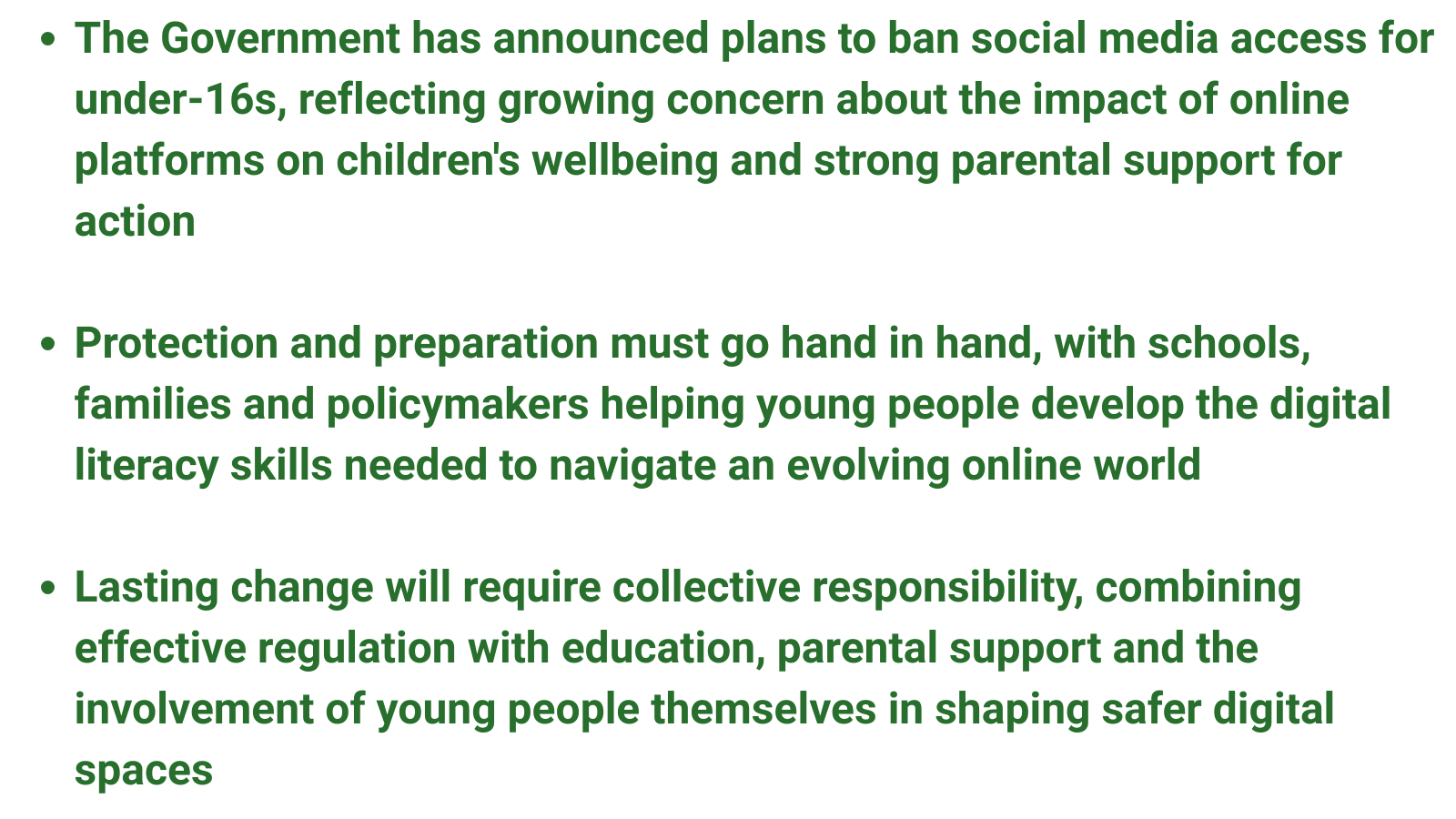
The Government's announcement reflects a growing concern about the impact social media is having on children and young people's wellbeing, and the urgent questions many families, schools and policymakers are grappling with.
In April, at the APPG for Parents, hosted by Mark Sewards MP, we heard from Frank Young, CEO of Parentkind, Justine Roberts, Founder of Mumsnet, and Cameron Garrett, Deputy Director for Research at More in Common.
The data they shared painted a striking picture of parental concern:
- 93% of parents believe social media is harmful to children and young people.
- 83% support a ban on social media use for under-16s.
One message came through loud and clear from parents across the country:

Yet what followed was a thoughtful discussion that highlighted the complexity of the challenge. There was broad agreement that this is not an either/or debate. We must protect children from harm while also preparing them for the digital world they are growing up in.
This is a balance I often hear school and trust leaders discussing through Challenge Partners. Digital technology is now woven into almost every aspect of modern life. The question is not whether young people will engage with it, but how we help them do so safely, critically and responsibly.
One of the most compelling arguments made during the discussion was that digital literacy must be taught in a way that evolves alongside technology itself. Rather than focusing solely on today's apps and platforms, we should help young people understand the principles behind them.
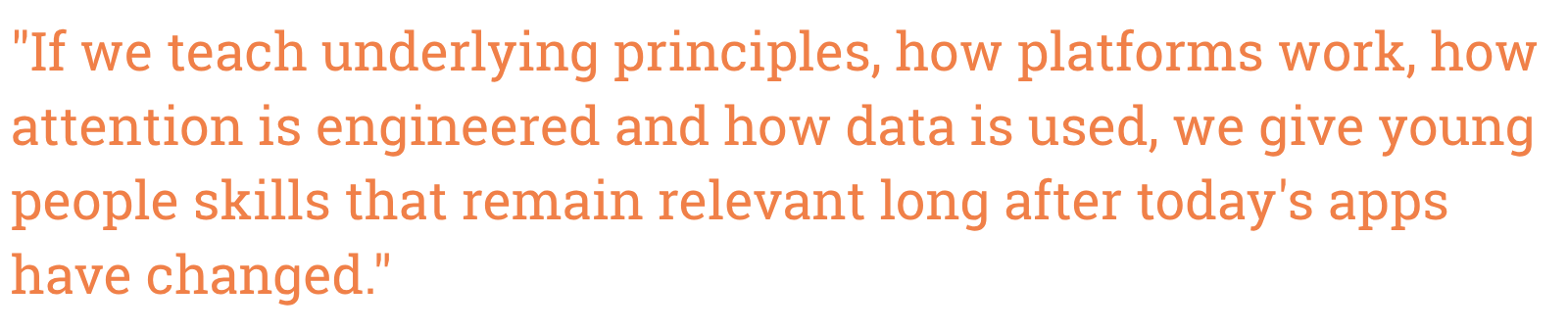
This feels particularly important given the pace at which technology evolves. Whether future restrictions are successful or not, young people will continue to encounter new platforms, new technologies and new online environments. The skills they need must be able to evolve alongside them.
Alongside this, there were calls for clearer guidance for parents, stronger and more effective regulation, and a greater focus on involving children themselves in shaping solutions. Young people are not simply the recipients of policy decisions. They should be active participants in conversations about the digital spaces they inhabit.
Of course, none of this offers a quick fix.
As both a parent and someone who works closely with school and trust leaders across the country, I left the discussion convinced that lasting progress will require collective action. Politicians, schools, families, policymakers, technology companies and young people themselves all have a role to play.
Lasting change will depend on more than legislation alone. If we can strike the right balance between protection and preparation, and continue listening carefully to what parents, schools and young people are telling us, we stand a far better chance of helping the next generation navigate the digital world with confidence, resilience and understanding.